As part of SongMaps Rye 2026 Rye based poet Morgan led a series of workshops in June with local people focused on the rivers. Hear from Morgan below:
The excitement I felt when planning the workshops for the Write by the River project for Songmaps Rye 2026 was well founded. I hoped if I could bring together local people who loved the rivers and locals who hardly knew them; locals who had written before and those who had never written, when we walked the rivers together, something special would happen: I was right.
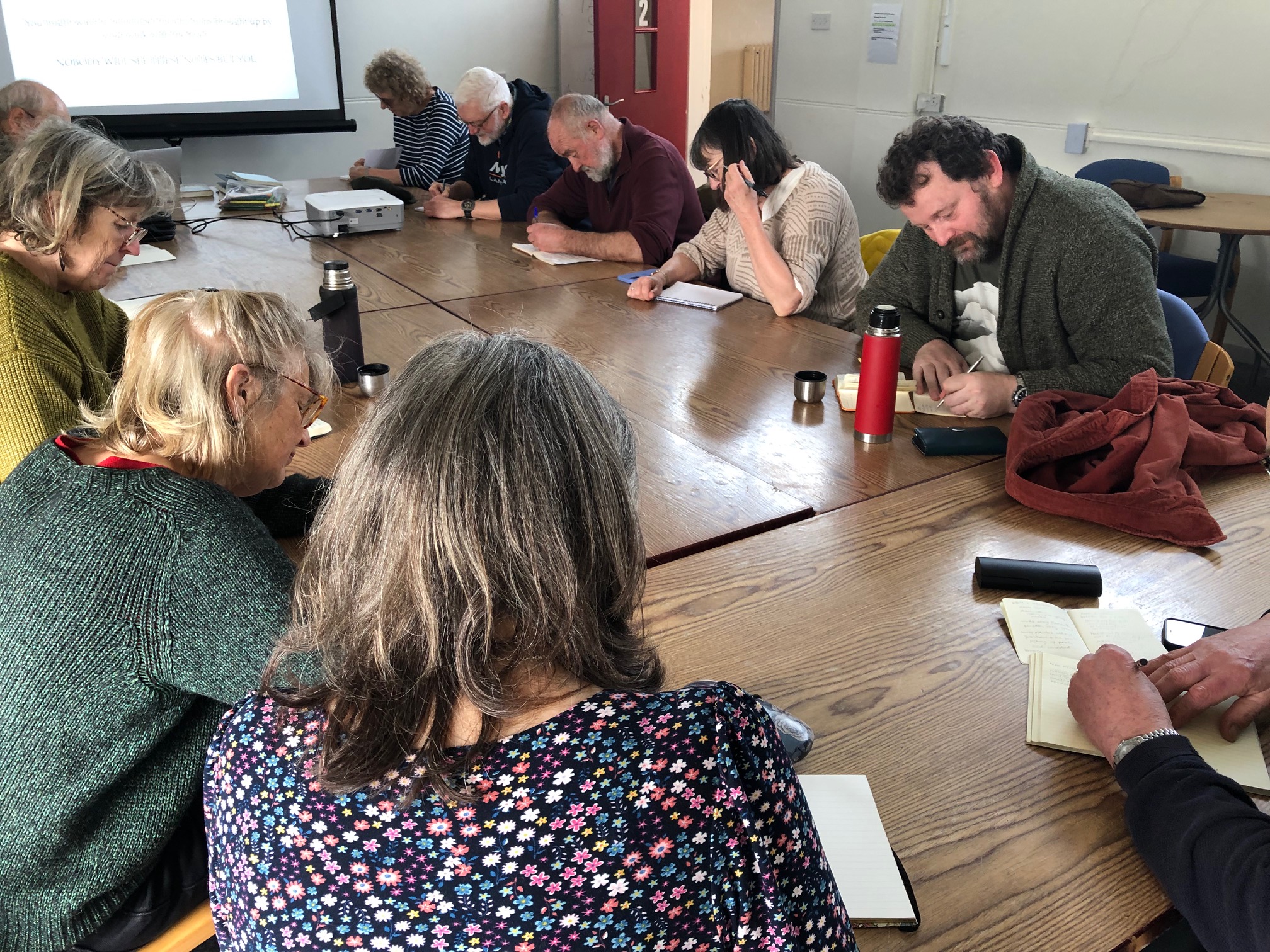
We are half way through the project now with workshops having been completed along the Tillingham and another to come at the Rother. The Tillingham is a small, secretive little river. It curves around the back of a housing estate in Rye before merging with the larger Brede and Rother to join the sea at Rye Harbour. Its a muddy river, a slow-winding river, fringed with reeds and on its banks are dog rose, willow and elder. Despite its modest size and its unassuming nature, the little Tillingham provoked strong emotions. Participants were asked in the first workshop to look at their relationship with the river and to discuss how we treat our living waters. The level of feeling generated was incredible. People expressed a mix of raw grief for the loss of clean rivers and real anger that current levels of pollution should have been allowed to happen across the country.
“Our rivers give us life,” one participant said. “If we disrespect our rivers and our environment we disrespect and harm ourselves.”
“Rivers are being abused and polluted by local sewage works so regularly it is becoming the norm,” another said. “An awareness campaign, naming and shaming those responsible, and scientific evidence of environmental damage are needed to back up a call for stricter penalties and protection.”
A third writer explored how our relationships with the river are unequal. “Oddly the most important thing I learnt was about local development and the river – how, when building new housing in Rye close to the Tillingham, we choose to turn our backs on it, looking inward to our own atomised lives, ignoring and neglecting the life of the river. This very action is symbolic of our attitude to our rivers. What we ignore and neglect, we no longer value. We exploit our river mercilessly but we might choose to become partners with it in a different way. Our relationship is symbiotic. We need to relearn from nature how symbiotic mutualism can work for rivers and humans.’
I felt the level of reaction was so strong it needed a wider audience and so I wrote an article about the participants’ feelings for our local newspaper, which was published in April.
A later workshop looked at the range of living things supported by the Tillingham and explored the idea of creating a personal totem for the river which could symbolise the history and identity of the place. Once a totem was chosen participants learned methods of invoking their totems in prose and poetry so they could ask for guidance, or help, in protecting the river.
I used simple prompts to stimulate ideas and creativity but the participants grabbed suggestions and ran with them. Poetry flowed out. The voice of the river was loud, the voice of the creatures making their home there was heard and the beginnings of our totemic incantations began to take shape. These curated writings will go to make up Riversong, a book of writing from the workshops illustrated by the work of local artists. I can’t wait to see what will happen in our Rye Harbour workshop and where the Rother will take us.
These workshops are supported by StrongBack Productions and funded by Arts Council England, the Chalk Cliff Trust and by the Friends of Rye Harbour Nature Reserve.
StrongBack Productions is thrilled to have been awarded a grant from a private Estate Fund in support of their SongMaps Rye Programme.
Registered Company No 8767837 Registered Charity No 1167818

